
Product destruction for brand protection.
Secure product destruction starts with written brand restrictions and a product-specific scope. Anchor coordinates independent local operators, approved instructions and documented processing.
Request a program review
Define the job before material moves.
Products, restrictions and evidence requirements determine the operator, handling and approved disposition.
Accepted products and brand requirements.
Programs may cover uniforms, branded apparel, footwear and packaging. Defective goods, recalled goods, expired products and electronics require stream-specific review before acceptance.
Your requirements identify the product, condition, markings or branding, prohibited resale, required approvals and the disposition outcome. Counterfeit seizures are accepted only with appropriate authorization and legal direction.

Custody and approved methods.
Before movement, the program can identify the site, load reference, seal, material and approved instruction. Where a seal is part of the program, a missing or tampered seal stops unloading, is photographed and escalated before a release decision.
Available method categories include shredding, crushing, dismantling or separation into constituent materials. Product, risk, permitted outlet and brand instructions determine whether a method is appropriate. No method is assumed suitable for every material.
Scope the project before collection.
Start an inquiry with sites or markets, product categories and condition, estimated quantity or weight, packaging, brand or resale restrictions, desired evidence and any required approvals. This information is used to evaluate scope, local operator availability, handling restrictions and documentation requirements.
The program agreement identifies the approved method category, custody controls, exception path, witness or video scope if selected, and record expectations.
Processing evidence and certificate.
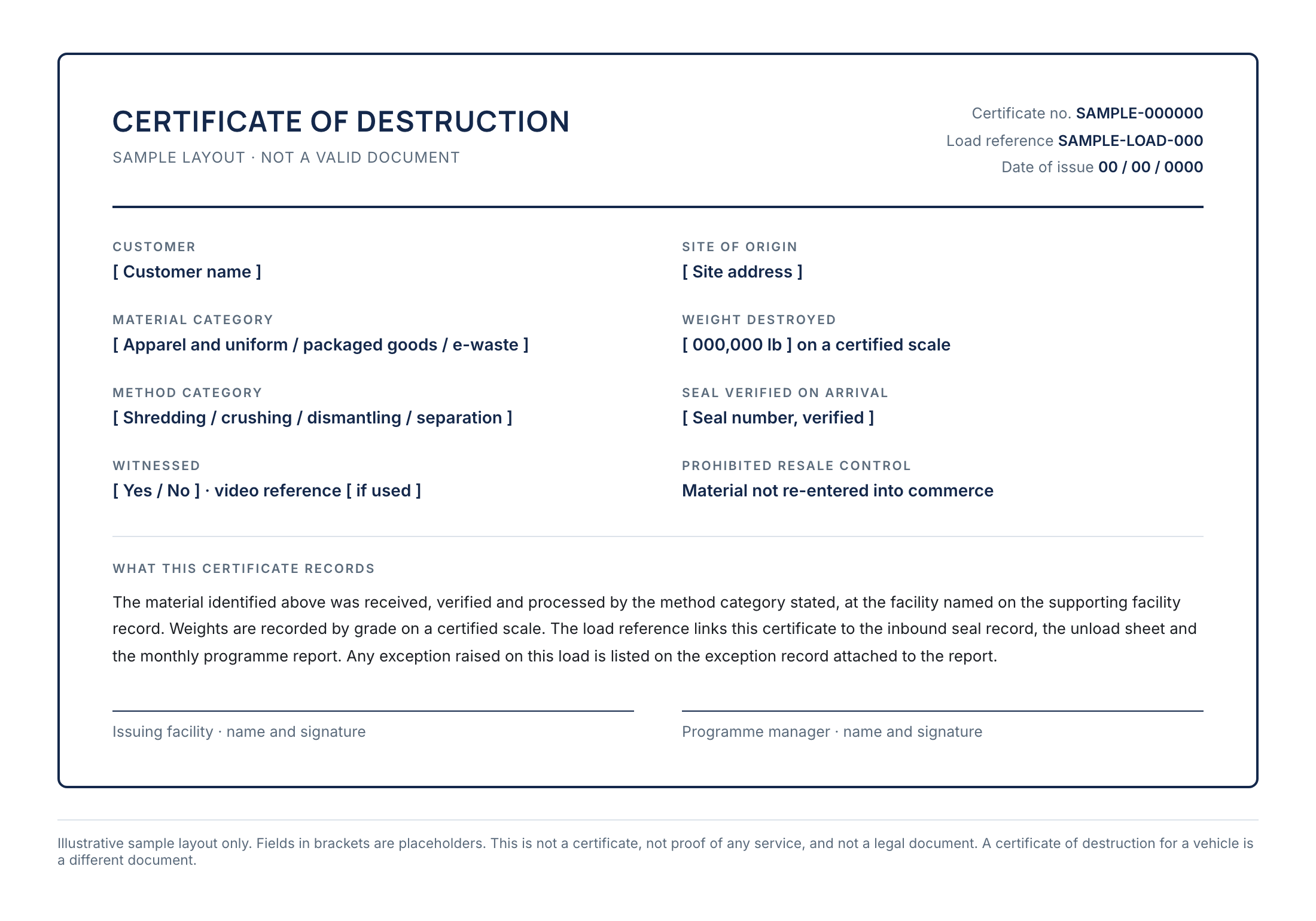
Your certificate identifies the load reference, processing date, material, verified weights and method category. It connects to seal checks, unload records and exceptions. Destruction and recycling are separate claims, with separate supporting evidence.
Changes to the approved instruction, custody condition or method are logged as exceptions. Anchor coordinates review with the independent executing operator, and required approval and resolution follow the program agreement.

Resources for your next decision.
What a certificate of destruction should include
A practical guide to certificates of destruction for multi-site teams, with chain of custody, disposition evidence, and a sample layout to use.
Read the guide Brand protectionUniform and branded apparel destruction and recycling
Protect your brand when uniforms and branded apparel reach end of life with controlled destruction, recycling records, and clear next steps to click.
Read the guideClear answers
What you should know.
Does certified product destruction mean Anchor is certified?
No. A certificate of destruction documents a processing event. Verify any required operator credential separately.
Can you recycle the materials after destruction?
Where the product rules, separation process and verified outlet permit it, recoverable material can be routed for recycling. The destruction record and recovery record must support both claims.
Can my team witness the work?
Witnessed or video-verified processing can be scoped with the operator. Availability, scheduling and evidence requirements are confirmed before the program is agreed.
How do you prevent unauthorized resale of our products?
A destruction-only program must state that resale, donation, substitution and unauthorized diversion are prohibited. Define accepted products, approved methods, custody evidence and subcontracting restrictions before release. Require written authorization for any change. A certificate is supporting evidence, not an absolute guarantee that misconduct is impossible.
What happens if the seal is broken, the load differs or records are missing?
Stop the affected step. Preserve the load reference and evidence, photograph the discrepancy and escalate to the designated contacts. Do not treat a mismatched seal, unapproved destination or missing disposition record as routine completion. The agreed scope defines release authority and incident notification.
Can our team witness destruction or request video evidence?
Include the evidence requirement in the scope before material moves. Availability depends on the facility, method, privacy and safety constraints. Witnessing or video must connect to the actual load reference; generic footage is not evidence that your products were processed.
Will we receive a complete audit package?
Define the required records up front: pickup and seal reference, receiving check, scale weights, disposition record, agreed certificate contents and unresolved exceptions. Your reporting requirements can connect them by site, material and reporting period. Sample reports on this website are fictional layouts, not evidence of a completed customer job.
Can an operator send our material to a different facility?
The approved destinations and change-control rules belong in the scope. An operator should not substitute a destination or subcontract a restricted job without the required written approval and qualification review. The customer must know who is authorized to decide.